
Air Monitoring & Clearance Certificates
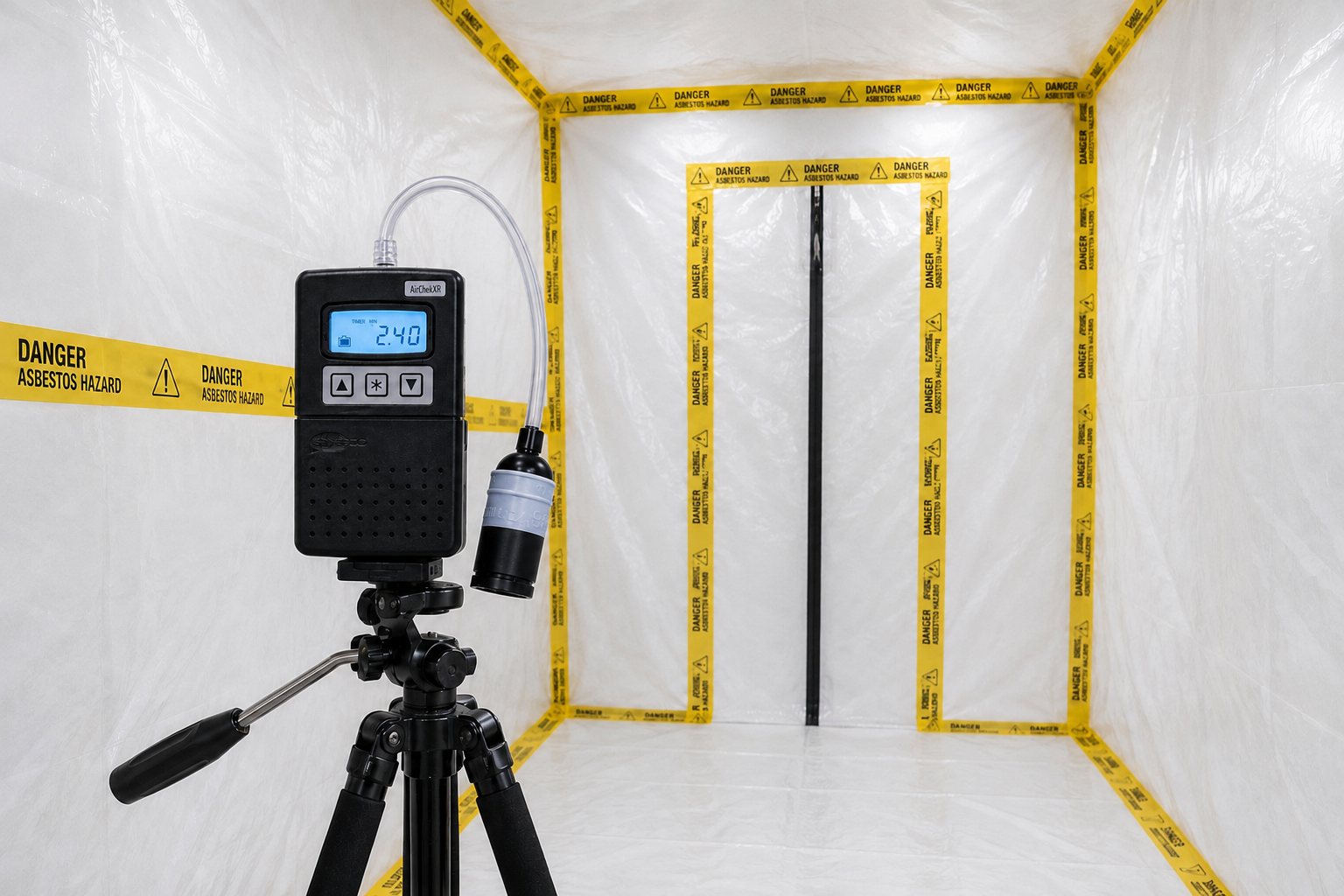
Air monitoring measures airborne asbestos fibre levels before, during and after removal works, while a clearance inspection confirms an area is suitable for reoccupation.
Hazclear Environmental provides background, control and clearance air monitoring and issues clearance certificates through a licensed asbestos assessor, independent of any removal scope.
Air Monitoring Services for Asbestos Removal Projects
Different types of air monitoring are used throughout an asbestos project to measure airborne fibre levels, verify that controls are working effectively and provide confidence that the work area and workers remain safe.
Background Monitoring
Baseline air readings taken before removal begins to record existing fibre levels at the site.
Exposure Monitoring
Personal air sampling during removal to measure worker exposure against the 0.1 fibres/mL standard.
Control Monitoring
Boundary air sampling during removal to confirm controls are effective and fibres are contained.
Clearance Monitoring
Air sampling after removal is complete to ensure the area is safe for reoccupation.
When Air Monitoring and Clearance Certificates are Required
The Work Health and Safety Regulation 2011 (Qld) and the How to Safely Remove Asbestos Code of Practice 2021 outline when air monitoring and clearance inspections are required, recommended or considered best practice. Requirements vary depending on the asbestos type, removal activities, site conditions and the potential for exposure to workers or the public.
Friable Removal
Air monitoring and a clearance certificate from an independent licensed asbestos assessor are mandatory for all Class A friable removal under Sections 473–475 of the WHS Regulation 2011 (Qld).
Higher-Risk Bonded Works
Air monitoring is recommended for larger bonded removals, soil works, indoor works and confined spaces under the How to Safely Remove Asbestos Code of Practice 2021. A clearance certificate is required for all licensed Class B removal under Section 473 of the WHS Regulation 2011 (Qld).


Occupied Sites & Live Work Zones
Sites where other workers, occupants or the public are present during removal — including construction sites, schools, hospitals and commercial buildings — where monitoring and clearance provide independent verification that the area is safe for reoccupation.
Our Air Monitoring Process
Our Clearance Process
Independent and Accountable
Common questions (FAQ)
Contact Us
Send through your site details and our team will review and respond as soon as possible.