
Class B Licensed Bonded Removal

Bonded Asbestos Removal

Bonded asbestos is firmly bound into a solid matrix — most commonly asbestos cement sheeting, roofing, eaves, cladding and wet-area linings. While more stable than friable material, it still releases airborne fibres when cut, drilled, broken or weathered.

Hazclear Environmental delivers bonded asbestos removal across residential, commercial and industrial sites using controlled work methods — wet removal, no power tools on asbestos, decontamination, regulated waste handling and project closeout documentation.

Request a quote Call 07 2103 4411
Bonded Removal Services

What Hazclear delivers for bonded asbestos removal

Bonded asbestos removal requires controlled work methods to keep the material intact and minimise fibre release. Hazclear manages the full scope — from licensed removal through dust suppression, decontamination and compliant waste disposal.

Class B Licensed Removal

Removal of more than 10 m² of bonded asbestos by a Class B licensed removalist as required under the WHS Regulation 2011 (Qld).

Controlled Wet Removal

Material kept damp and removed intact using hand tools — no power tools, abrasive cutting or high-pressure water on asbestos materials.

Decontamination

Work area, plant and personnel decontaminated after removal to prevent cross-contamination of the site.

Licensed Waste Disposal

All asbestos waste double-wrapped, labelled and disposed of at facilities licensed to accept asbestos under the Environmental Protection Act 1994 (Qld).

Common BONDED Materials

Where bonded asbestos is typically found

Bonded asbestos was widely used in Australian building materials from the 1940s through to the 1990s. It is present in a range of residential, commercial and industrial products and is commonly encountered during renovation, demolition and maintenance works on older buildings.
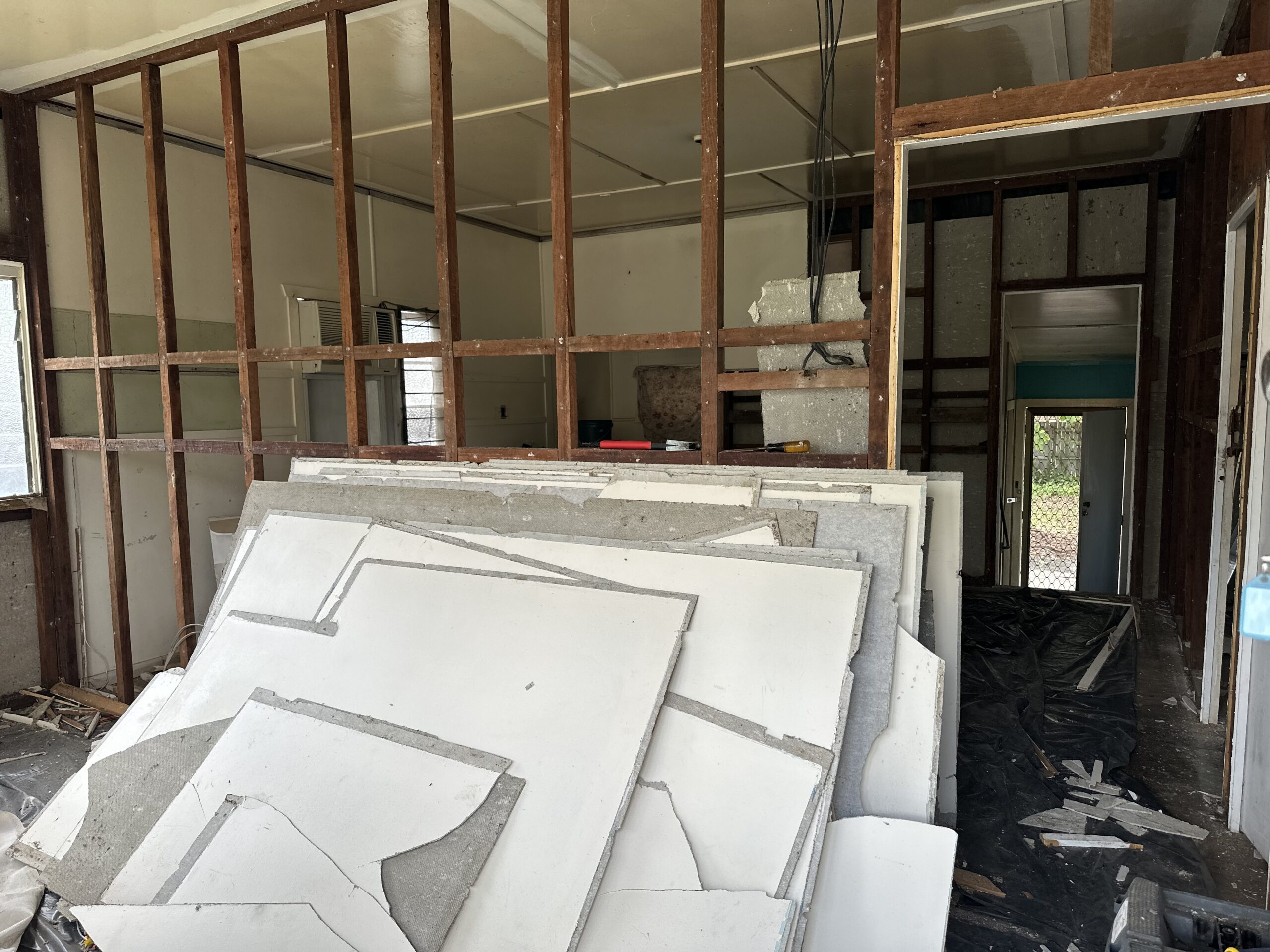
Bonded asbestos cement flat sheeting installed as internal wall lining in an old Queenslander

Walls & Ceilings

Internal and external fibre-cement flat sheeting used as wall linings, ceiling panels and partition walls in residential and commercial buildings.

Roofing & Eaves

Corrugated asbestos cement roofing, eaves linings, gable sheeting and ridge capping commonly found on older Queensland homes and commercial buildings.
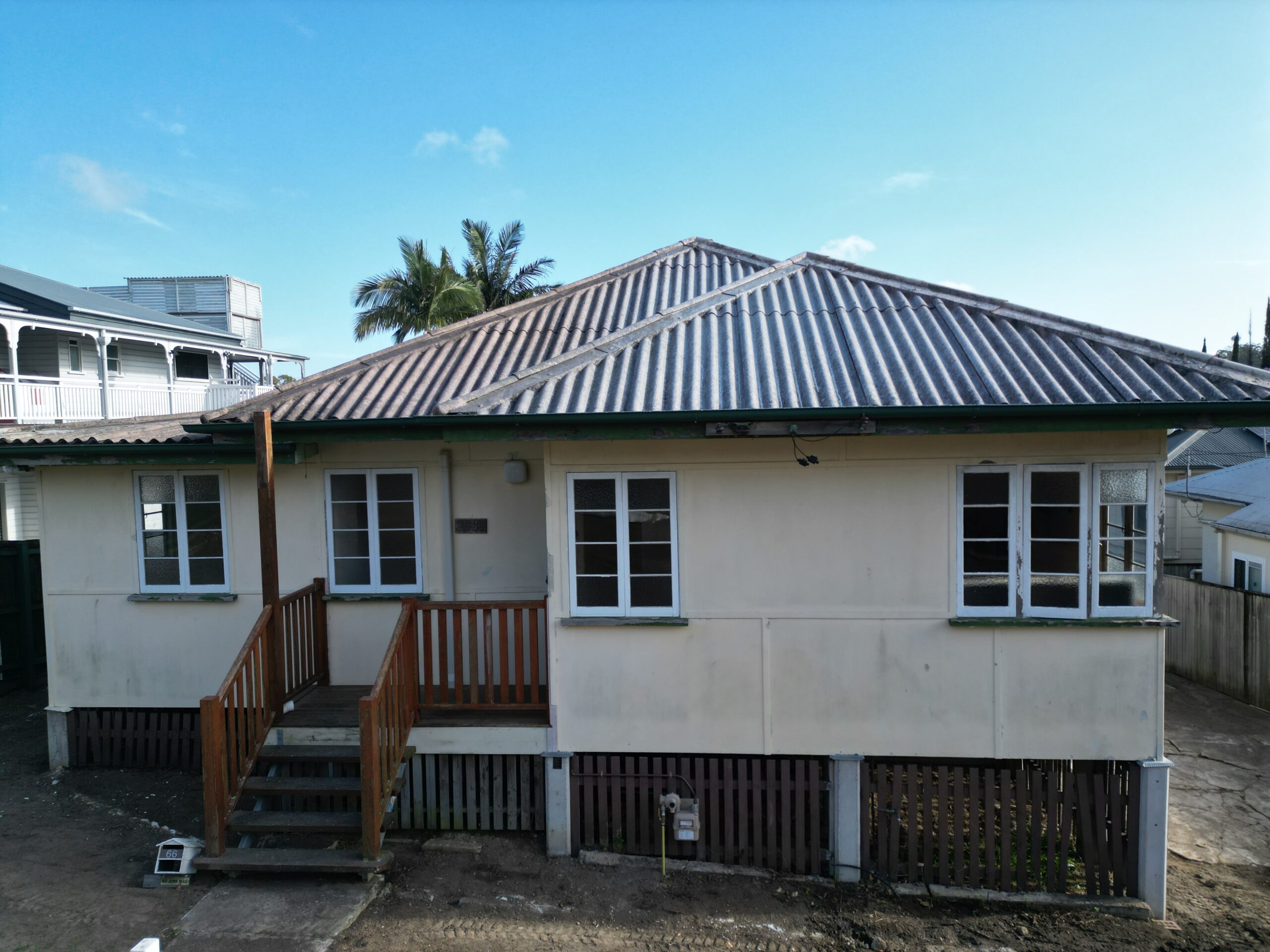
Corrugated asbestos cement roofing and eaves lining on an older building.
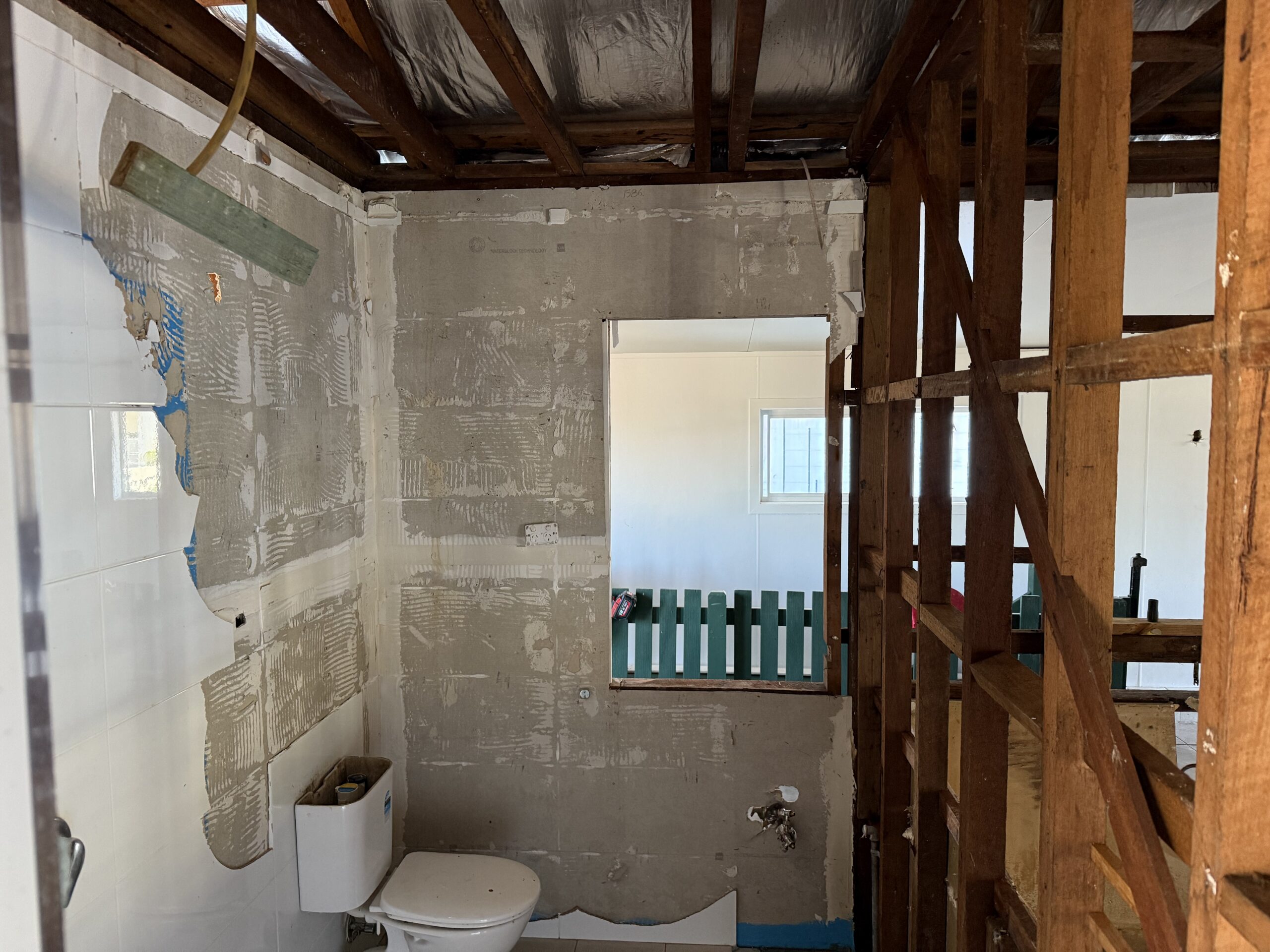
Asbestos cement sheeting installed as wall lining in a bathroom wet area.

Wet Area Linings

Fibre-cement sheeting used as wall and floor linings in bathrooms, laundries, kitchens and other wet areas in older buildings.

Fencing & External Sheeting

Asbestos cement fence panels, shed cladding and external sheeting common to older residential and industrial properties.
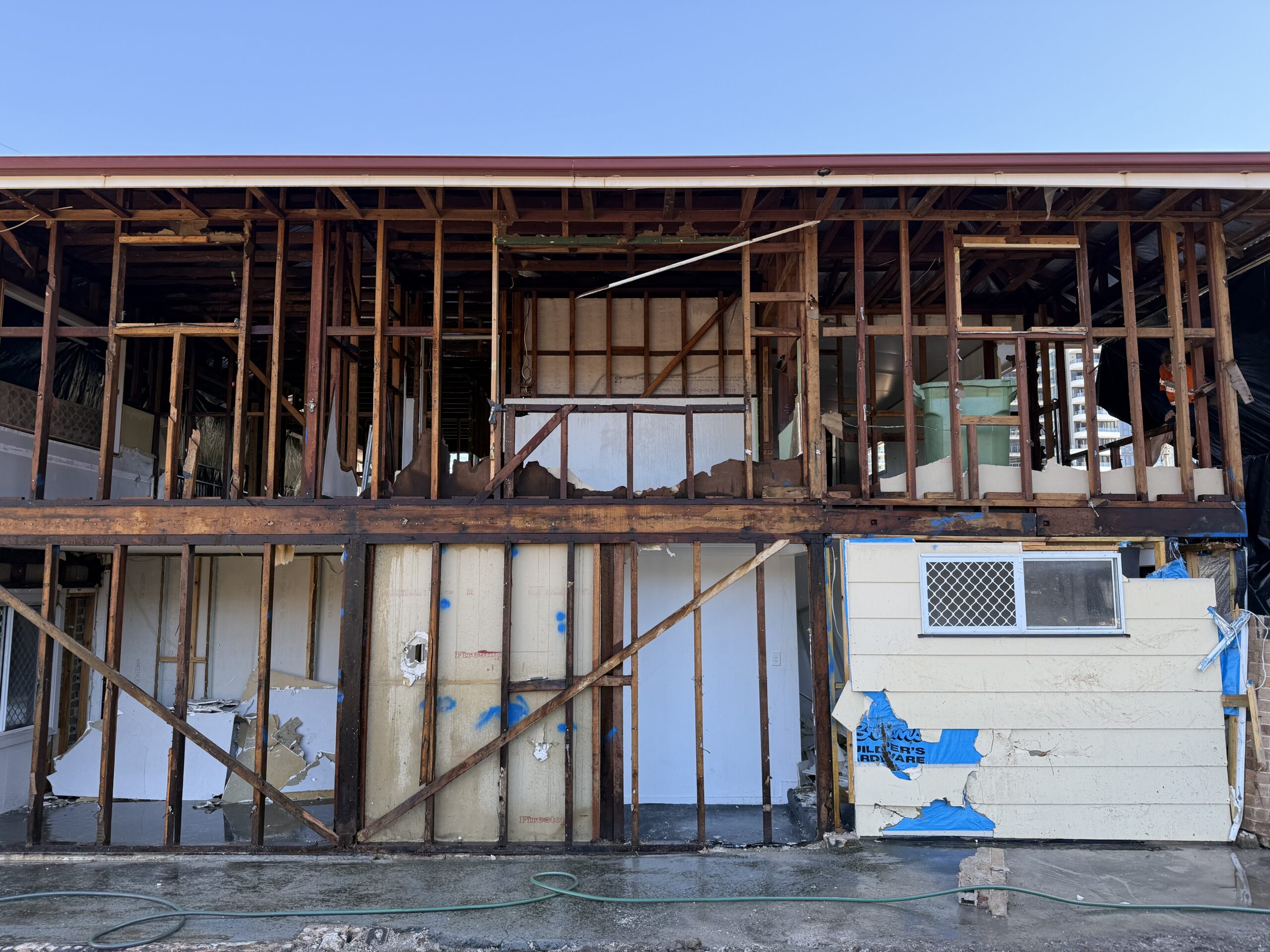
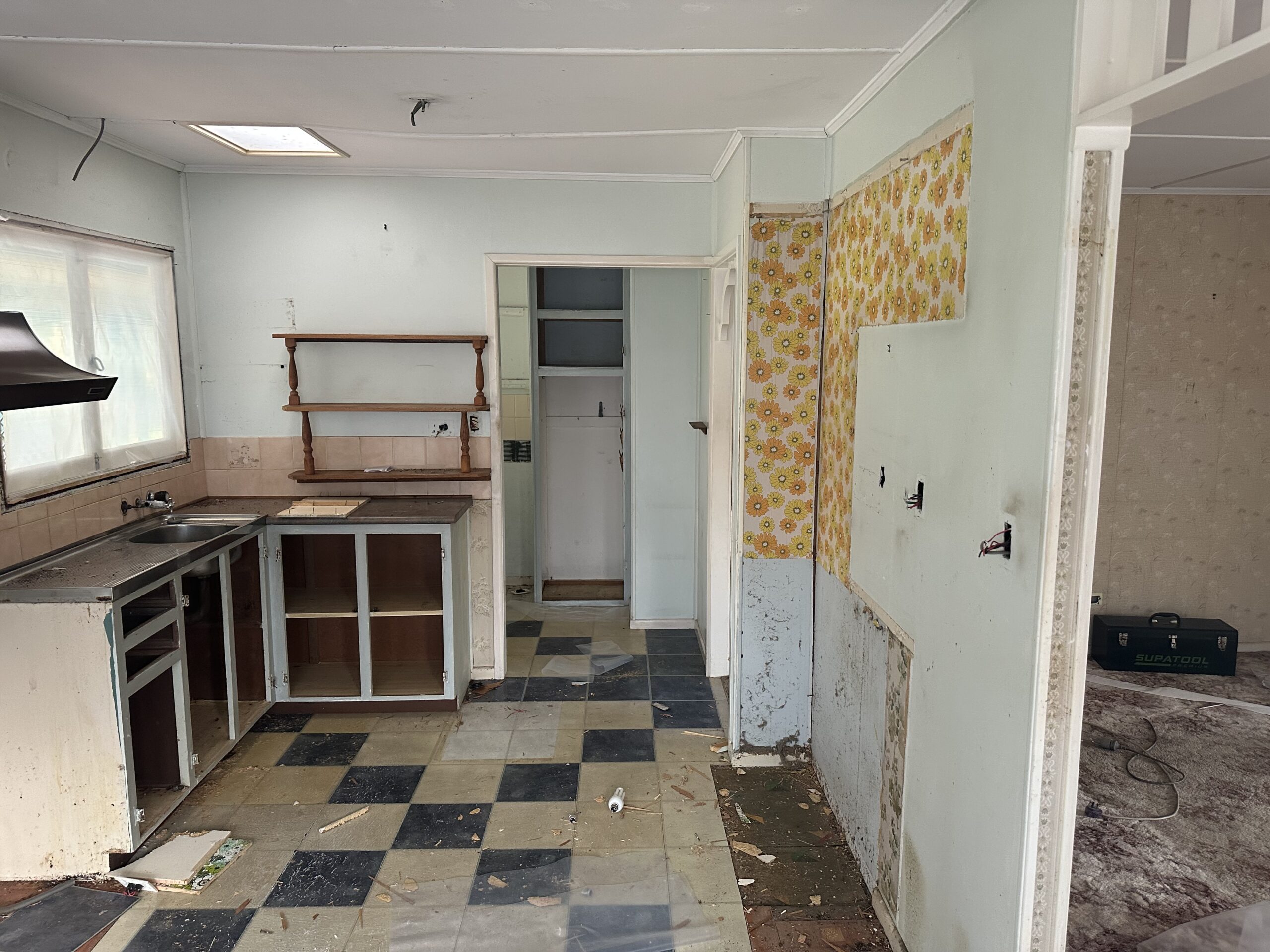
Exterior of a residential building with bonded asbestos cement sheeting removed and stripped back
Asbestos-containing vinyl floor tiles identified during a building inspection.

Vinyl Floor Tiles

Vinyl floor tiles containing asbestos — commonly found in kitchens, hallways and commercial flooring.

Electrical Backing Boards

Asbestos cement boards used as backing panels behind electrical switchboards and meter boxes in residential and commercial buildings.
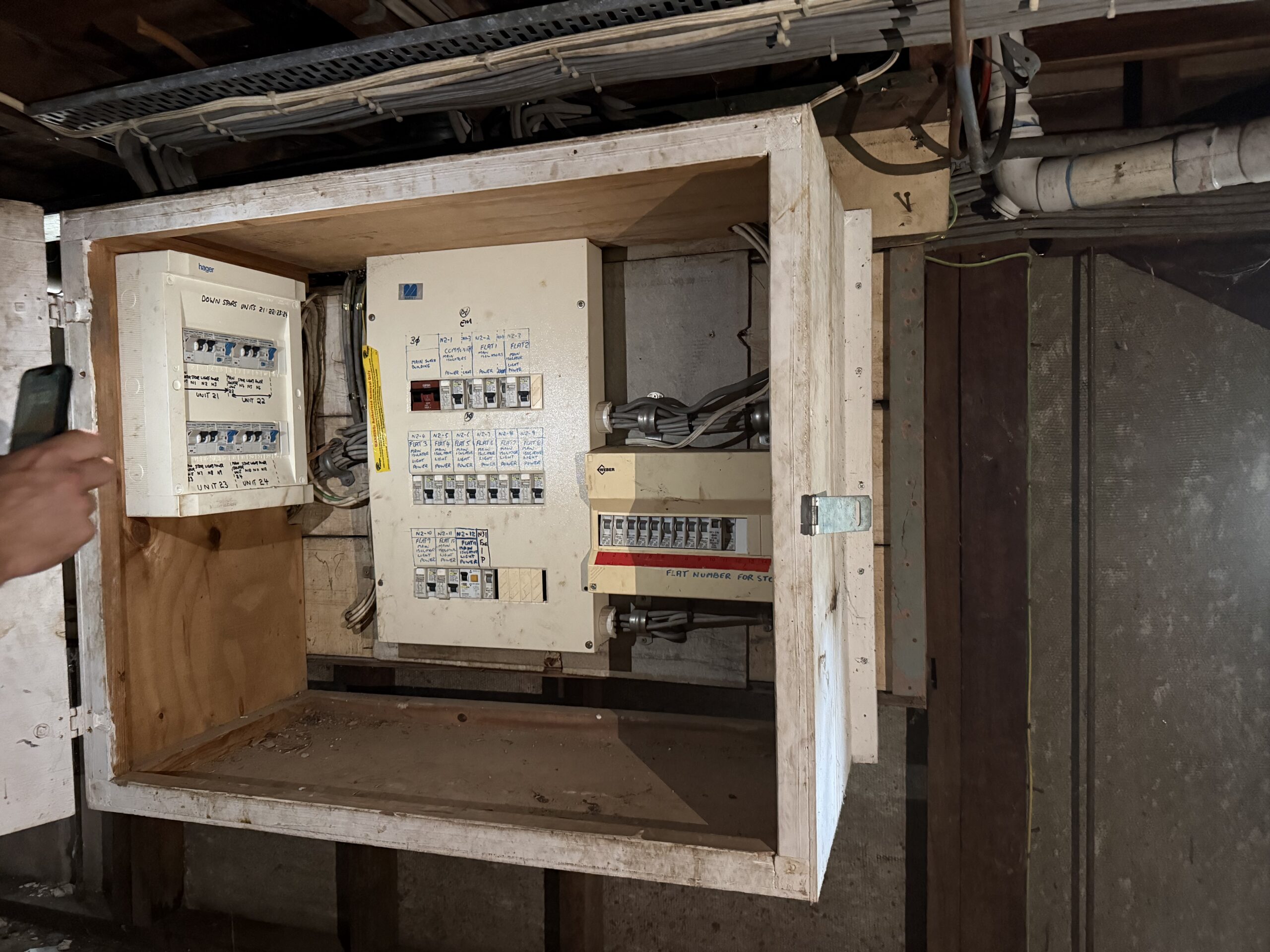
Asbestos cement backing board installed behind an electrical switchboard.
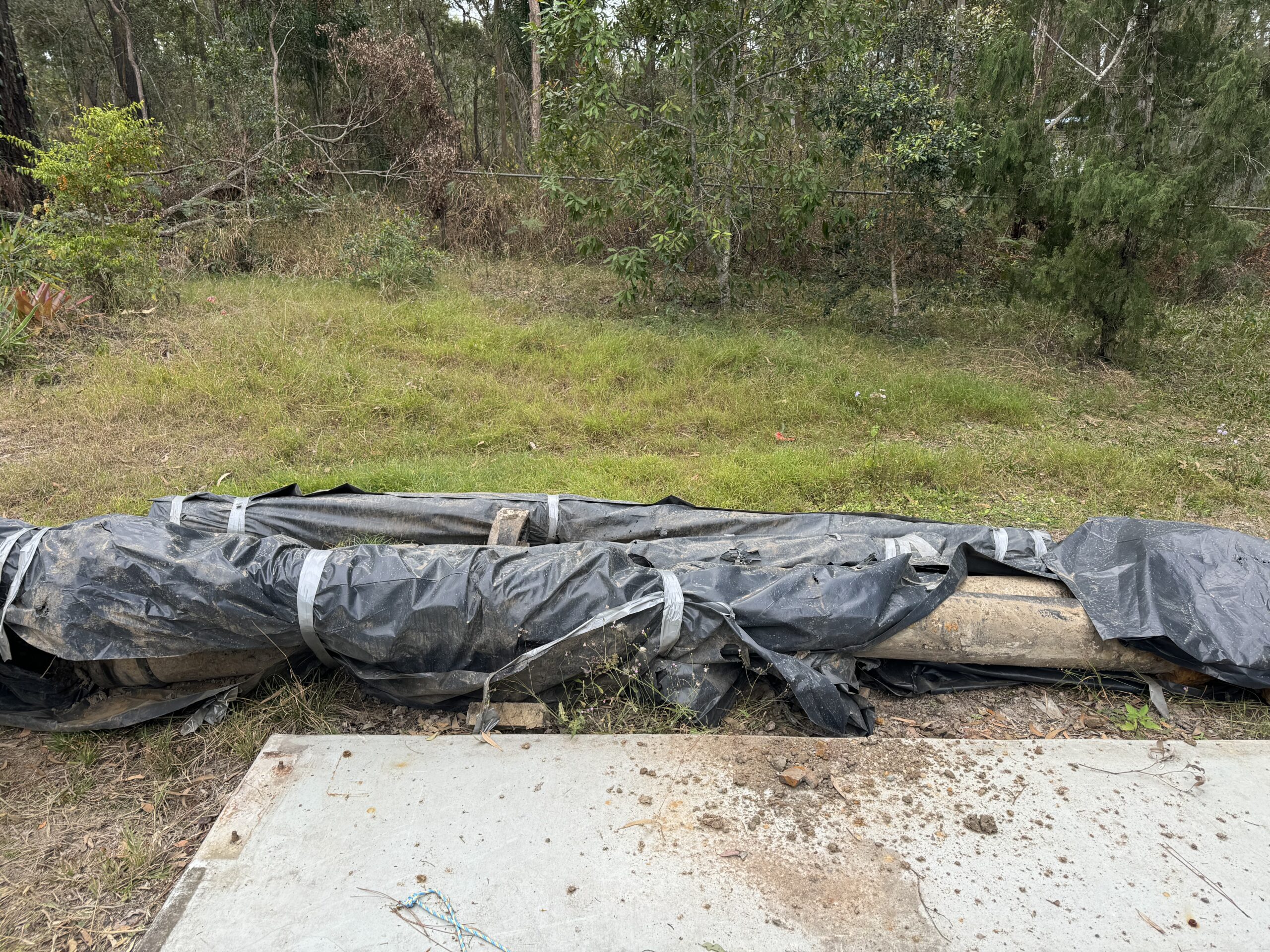
Asbestos cement water main pipe partially sealed and bagged for regulated waste disposal.

Water & Flue Pipes

Asbestos cement pipes used for water supply, stormwater drainage and flue pipes connected to older hot water systems and heaters.

Our Bonded Removal Process
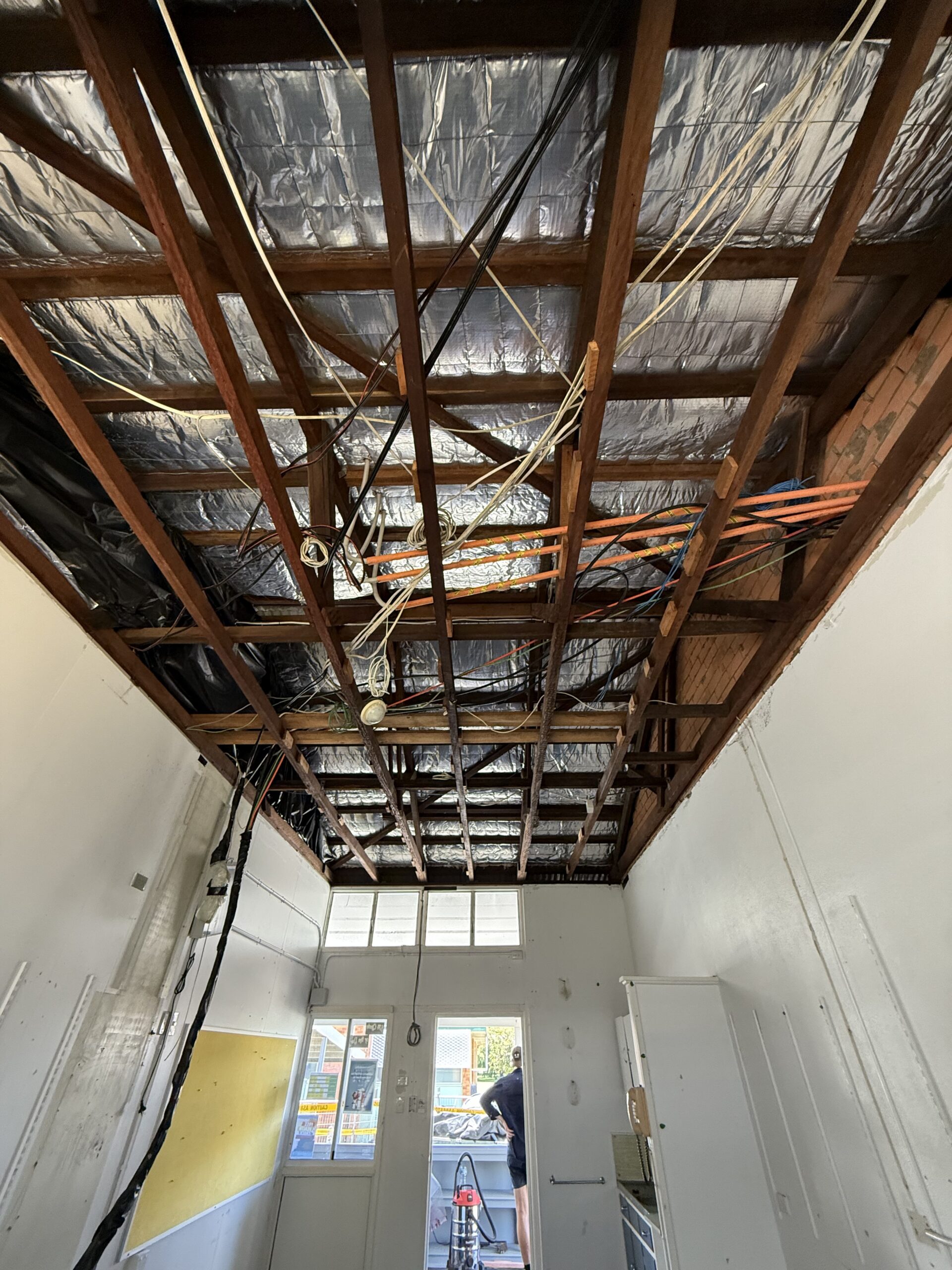
  • We confirm the scope, prepare the work area and establish signage and barricading before any material is disturbed
  • We remove all material intact using hand tools and wet methods — no power tools, abrasive cutting or high-pressure water is permitted on asbestos
  • We decontaminate the work area, plant and all personnel once removal is complete
Clean ceiling space after bonded asbestos cement sheeting has been fully removed.

Our Waste & Closeout Process

  • We double-wrap, label and transport all asbestos waste through licensed ERA 57 regulated waste carriers
  • We dispose of all material at facilities specifically licensed to accept asbestos waste under the Environmental Protection Act 1994 (Qld)
  • We provide disposal dockets, waste tracking certificates and clearance records for the project file

Compliant bonded removal

  • Bonded removal is governed by the WHS Act 2011 (Qld) and WHS Regulation 2011 (Qld) — Hazclear operates under current Class A and Class B removal licences.
  • All work is carried out in accordance with the How to Safely Remove Asbestos Code of Practice 2021 (Qld), which prohibits the use of power tools, abrasive cutting and high-pressure water on asbestos materials.
  • A Class B licence is required to remove more than 10 m² of bonded asbestos — removal of 10 m² or less must still comply with Part 8.7 of the WHS Regulation 2011.
  • Asbestos waste is classified as Category 2 regulated waste under Schedule 9 of the Environmental Protection Regulation 2019 (Qld) and tracked through licensed disposal.
  • Workplace Health and Safety Queensland is notified before licensed removal commences as required under the WHS Regulation.
  • If bonded material is found to have degraded to a friable state during works, Hazclear holds the Class A authority to manage the reclassification and escalate controls on site without delay.

Common questions (FAQ)

Removing more than 10 m² of bonded asbestos requires a Class B licence under the WHS Regulation 2011 (Qld). Removing 10 m² or less does not legally require a licence, but the work must still follow the How to Safely Remove Asbestos Code of Practice 2021. Hazclear recommends licensed removal for any quantity to ensure the work is properly controlled and documented.

These methods release large quantities of airborne fibres and are prohibited under the Code of Practice. Breaking or cutting bonded material can also reclassify it from bonded to friable, which triggers Class A control measures including a negative air pressure enclosure, mandatory air monitoring which significantly increases the scope, cost and timeframe of the project.

If the material is in good condition and will not be disturbed by planned works, management in place under an asbestos management plan is often appropriate. Removal is recommended where the material is damaged, deteriorating, or will be affected by renovation, demolition or maintenance. Hazclear can assess the condition and advise on the appropriate pathway.

If material breaks down to the point it can be crumbled by hand, it is reclassified as friable. This requires work to stop, the area to be reassessed, and Class A controls to be implemented before works resume.

Contact Us

Send through your site details and we will get back to you as soon as possible.